
A Journey of Broadband Resilience in Fleming-Neon, Kentucky
Lessons for Communities Impacted by Hurricanes Helene and Milton

As the Program Director of Connect Humanity’s Appalachia Digital Accelerator, I’ve had the opportunity to work with many resilient communities across Appalachia. Among them, Fleming-Neon, Kentucky, stands out—not just for the challenges they’ve faced, but for their determination to turn disaster into a springboard for lasting transformation. Reflecting on their journey, I believe their experience offers valuable lessons for the communities now facing the aftermath of Hurricanes Helene and Milton.

When a flood hit Fleming-Neon in 2022, it devastated key community infrastructure and left much of the town cut off from essential services. City Hall was destroyed, and all of the town’s documents were lost (if only they had copies in the cloud!). While the immediate priority was clear: roads, water systems, and public services needed to be rebuilt, one thing became abundantly clear—broadband access was no longer a luxury; it had become a necessity for both recovery and long-term resilience.
I first met Jeff and Cheryl Hawkins about 18 months after this flood. The town had reached a point of stabilization, but much remained to be done. This is where our collaboration through the Appalachia Digital Accelerator began in earnest.
Broadband: a foundation for resilience and recovery
Disaster recovery isn’t just about repairing the physical infrastructure; it’s about making sure communities stay connected. Connected to emergency services, relief efforts, and with loved ones. In Fleming-Neon, internet service remained poor for years after the flood. During our work together, we discovered that the internet cable (ONT) boxes, placed on the exterior of the building by the ISP, had been filled with mud and debris during the flood and were never cleaned or replaced as part of the recovery effort. As a result, much of the town still faces inconsistent and unstable broadband.

In addition to getting people connected, local leadership realized that improving connectivity was vital to underpin their vision for the town. In the aftermath of the flood, a group called ‘Neon-Rising’ formed with the goal to bring new life to the community. They developed an ambitious improvement plan which includes investments in housing, tourism, local skills, small business development, and more. Affordable, high-speed broadband is central to the plan’s success.
How SOAR is supporting Fleming-Neon

Our partners on the ground, Shaping Our Appalachian Region (SOAR), recognized that the Appalachia Digital Accelerator could offer the data and guidance the community needed to move their broadband ambitions forward. Together, we began working on a plan to ensure the town’s recovery wasn’t just about rebuilding what had been lost but also laying the foundation for a more digitally and economically inclusive future. SOAR’s role continues to be pivotal in ensuring that the community stays on track, balancing the competing priorities of a town still in the midst of transformation while assisting them with the completion of their connectivity plan.
Data and mapping to drive strategic decisions

To help Fleming-Neon’s leaders see not only the gaps but also the potential, our first step was to provide detailed broadband maps showing where the town’s current infrastructure was lacking and where opportunities existed to integrate broadband into their rebuilding efforts.
From these maps, a key opportunity emerged: the chance to lay broadband conduit during repairs to its sewer system which was heavily damaged by the flooding. This strategy would reduce the cost of buried fiber while providing the town with long-term access to high-speed internet and increasing resiliency.
Leveraging the Accelerator for infrastructure and financial planning
Beyond providing data, the Appalachia Digital Accelerator supports communities to identify options for broadband deployment and use data to make informed, strategic decisions. For example, by leveraging sewer system repairs to lay conduit and pull fiber, Fleming-Neon would have the opportunity to own its broadband assets. This ownership would allow the town to control the quality of service by leasing access to one or more ISPs, creating a sustainable revenue stream while ensuring the service meets community needs.
The Accelerator also provides financial analysis and supports communities to develop robust business strategies. We helped Fleming-Neon evaluate the capital expenditures (CAPEX) and operational expenses (OPEX) needed to deploy and maintain a broadband network and we guided them through potential funding sources, including federal infrastructure grants and private investments, providing detailed financials to include in the connectivity plan that will guide next steps.
Digital equity and economic development
Throughout this process, Fleming-Neon has demonstrated a strong commitment to digital equity.

With support from the Accelerator, Fleming-Neon is developing a plan that puts broadband at the center of town’s broader vision for economic development and regeneration.
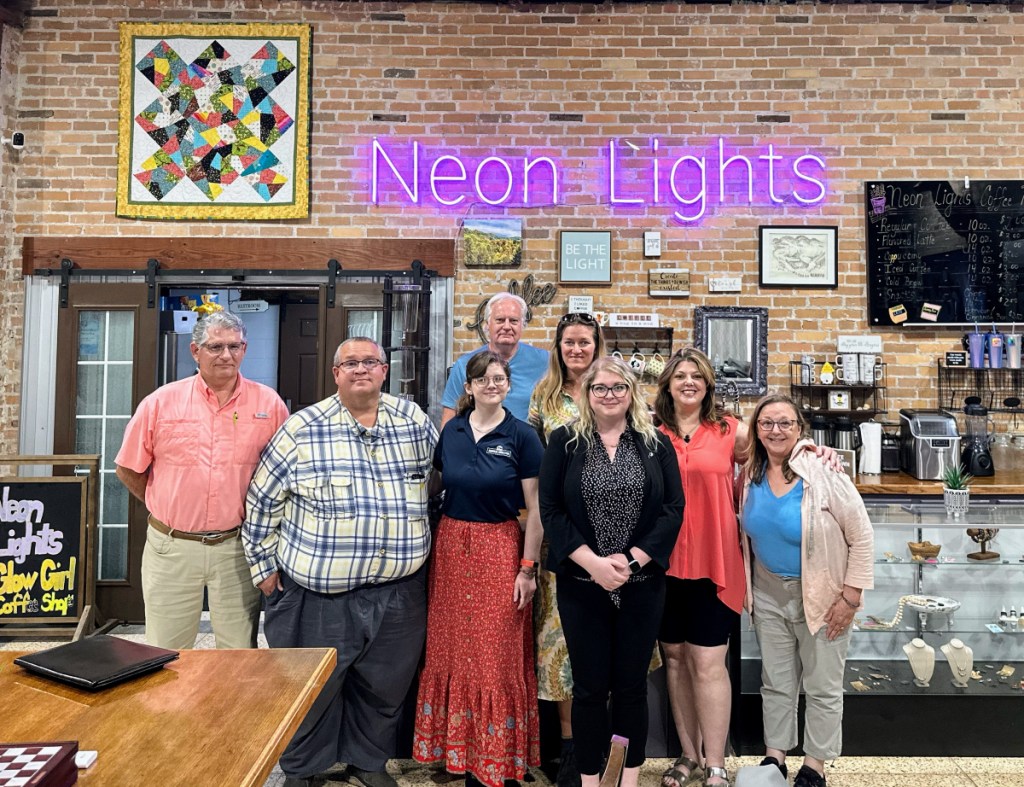
After opening their building as an emergency response center during the flood, Cheryl and Jeff founded Neon-Lights as a coffee shop and WiFi hub to serve as a community recovery initiative.
Now Neon-Lights is expanding further, laying plans for a vibrant community center that will serve as a hub for residents to access a range of digital tools and services. This is just one pillar of a the multi-pronged effort from Neon-Rising to retain and attract young people to the area, create programs to improve digital literacy and promote remote work opportunities, attract new businesses, establish telehealth services, boost tourism, and expand educational resources for all.
Challenges and looking ahead
Of course, challenges remain. Fleming-Neon still faces inconsistent service from existing ISPs. There are concerns about overreported broadband coverage and even census counts, particularly in the aftermath of the 2022 flood. For example, many residents who were financially able to leave never returned after the flood, which led to vastly outdated population counts which impacted Fleming-Neon’s eligibility for certain funding opportunities. Through persistent advocacy efforts, the Accelerator team was able to successfully encourage the census to re-survey the area. Just recently, some residents have reported to have received a new census booklet to fill out. Issues like these continue to be a challenge; but, despite these obstacles, the community remains determined.
Take-aways for communities impacted by Hurricanes Helene and Milton
Reflecting on Fleming-Neon’s journey, I’m reminded of the resilience and foresight needed to turn disaster into an opportunity. The devastation of the 2022 flood could have left the town focused solely on immediate recovery, but they chose to look forward, using the tragedy as a chance to rebuild in a way that not only addresses their current needs but also prepares them for the future.
To the communities now navigating recovery from Hurricanes Helene and Milton: Don’t overlook the details in disaster recovery – Fleming-Neon had to address issues like clogged internet cable boxes that hindered their progress—small but critical oversights that set them back years in their digital goals.
Similarly, if their city’s records were digitized and saved to the cloud instead of solely stored on paper in filing cabinets — how many months of work to recreate records could have been avoided?
These examples highlight the importance of ensuring accurate, up-to-date information and that recovery is about more than rebuilding structures; it’s about understanding what long-term obstacles might emerge and addressing them proactively.
Leverage the data and guidance available through programs like the Appalachia Digital Accelerator, and use this opportunity to lay the groundwork for a connected future that will support not only disaster recovery but also long-term economic development and digital inclusion.
For more information about broadband in disaster situations, check out Sam’s recent post on ‘Disaster-Ready Connectivity: 10 Steps to Help Build Broadband Resilience’
Keep in touch
To learn more about our work follow us on social media, subscribe to our newsletter, and write to us anytime at info@connecthumanity.fund.