
Community-centered networks are investable — if we create the right tools
Presenting the first cross-sectional study of investment-readiness in community-centered broadband providers
At the 2025 Internet Governance Forum (IGF) in Norway this June, Connect Humanity shared new research into the financing needs — and potential — of community-centered internet providers across the Global South.
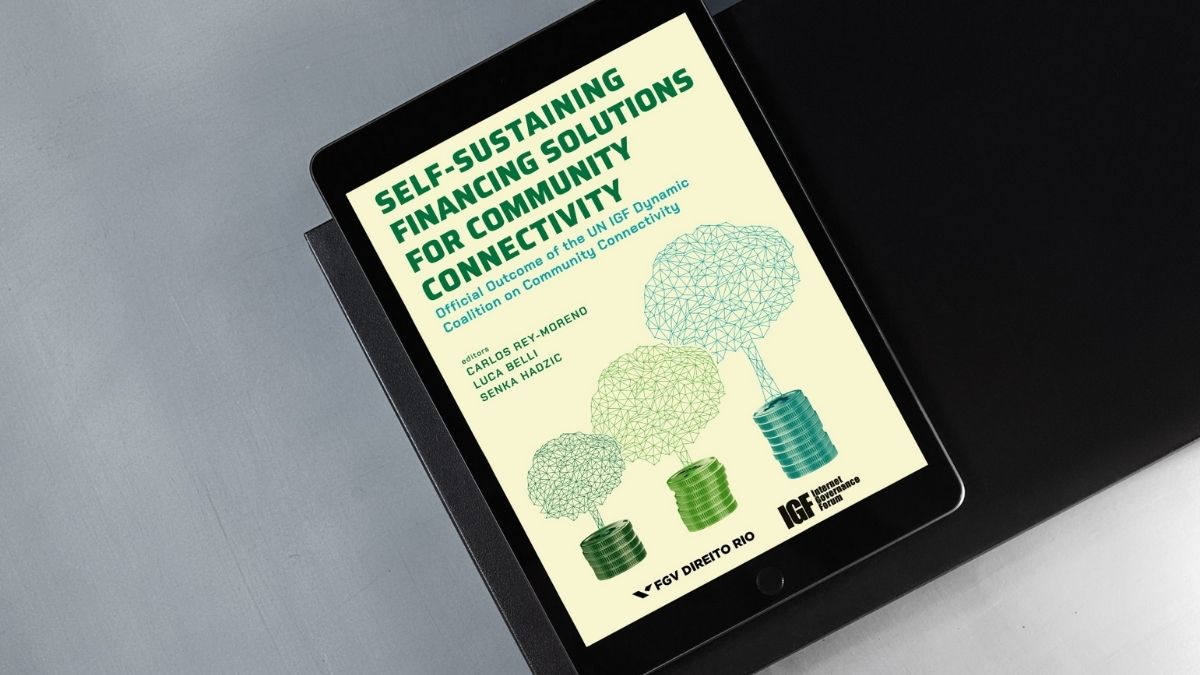
Our chapter, published in the new volume Self-sustaining Financing Solutions for Community Connectivity — a collaboration between the UN IGF Dynamic Coalition on Community Connectivity (DC3) and the Center for Technology and Society (CTS-FGV) at Getulio Vargas Foundation (FGV) — offers a practical look at nine Community-Centred Connectivity Initiatives across Asia, Africa, and Latin America. The aim is to understand what it will take to unlock sustainable investment in these initiatives, many of which have emerged to serve communities long overlooked by traditional internet service providers.
Read our chapter: Building an Impact Investing Market for Community-centered Connectivity
Why we did this work
Community-centered ISPs are often seen solely as small, grant-funded experiments — well-intentioned but not commercially viable. That narrative is increasingly outdated. It’s clear to us, based on our analysis and experience investing in digital infrastructure, that these networks should be recognized as infrastructure, not charity — and funded as such.
And as international development funding becomes more uncertain, the need for predictable, affordable capital is critical to the long-term sustainability of these efforts. This was a point echoed by network leaders we interviewed for this chapter.
To better understand where these networks stand on the path to investment readiness, we applied Connect Humanity’s investment framework — developed for assessing broadband projects in under-connected areas — to nine diverse, community-led initiatives. Our guiding question: Are these networks investable? If not yet, what’s standing in the way?
What we learned
These networks are meeting real demand
Every initiative we analyzed serves communities overlooked by commercial providers — rural areas, Indigenous and quilombola areas. Once networks are deployed, they tend to see strong take-up: 30–50% adoption rates are common.
Most are operationally sustainable. The hurdle is upfront capital.
Many of the networks are able to cover their day-to-day operating costs. What they struggle with is accessing relatively small amounts of funding — often just $50,000 to $300,000 — to build or expand infrastructure. Traditional lenders want collateral or credit history that small community ISPs don’t have. National broadband funds often exclude them.
The investment risk is real, but manageable.
Using our risk framework, two networks were rated “low risk,” thanks to clean financials and clear governance. Most were rated “moderate risk” — financially stable but needing stronger systems or clearer growth plans. A few were higher risk, typically due to unclear ownership or a reliance on project-based funding. This is no different from what we see in other investment portfolios.
Capital tools need to fit the model.
Conventional loans don’t work well for this type of enterprise. Better options include recoverable grants, revenue-based financing, and blended capital pools — models that match the scale and structure of these community networks.
What’s needed to move forward
Community networks enable access to vital infrastructure and in many cases, are the only option for the communities they serve. But they’re locked out of traditional finance systems.
To change that, we need:
- More fit-for-purpose capital: Smaller, more flexible investment tools designed for community ISPs.
- Stronger technical and business support: Many networks need help with business planning, forecasting projections, and investor engagement.
- Aggregated investment vehicles: Most networks are too small for institutional investors on their own, but a portfolio of networks can spread risk and attract more capital.
- New narratives: These networks aren’t “nice to haves”. They’re platforms for education, economic development, and civic life. They should be treated, and funded, as infrastructure.
Read our chapter to lean more and explore the full publication, edited by Carlos Rey-Moreno, Luca Belli, and Senka Hadzic.
We hope this work helps clarify what’s working, what’s missing, and what kinds of investment tools are needed to bring more communities online in ways that are sustainable, community-owned, and built to last. We’re grateful to all of the networks who contributed their time and insight — and to APC for their ongoing partnership in this effort.
Keep in touch
To learn more about our work follow us on social media, subscribe to our newsletter, and write to us anytime at info@connecthumanity.fund.