
How small connectivity providers can help close Brazil’s digital divides
An update on Connect Humanity's international work

Connect Humanity was founded with the belief that when connectivity providers have strong ties and commitment to the communities they serve, people receive better broadband. That’s why we use our capital and expertise to help power community-focused internet service providers (ISPs).
While today our work is primarily based in the United States, our ambitions to support community broadband extend far beyond US borders. Our newest board member Jeanine Abrams McLean calls this “our audacious goal”.
Though the context of connectivity is different in every country, the need to capitalize the providers best able to close the digital divide is universal. I joined the team as Director of International Programs to help figure out how we could best replicate our success beyond the US, starting with Brazil.
Why Brazil?
Just as in the United States, our work in Brazil is deeply focused on community-centered connectivity. Here this involves partnering with small Internet Service Providers (ISPs) that have been instrumental in broadening Brazil’s internet access in recent years. With over 11,000 small ISPs across the country, these providers are often the lifeblood of remote communities, delivering essential internet services in areas where larger companies may not venture.
Despite significant progress in expanding connectivity in recent years, less than one-quarter of the population has access to what Information and Coordination Center for the .br Domain (NIC.br), an organization pivotal in overseeing the governance of the Brazilian internet, defines as ‘meaningful connectivity’. This means more than 160 million people lack access to the level of data, speed, devices, and/or usage environment necessary to fully benefit from the internet.
Brazil’s challenge extends beyond its vast size and diverse geography, with wide income disparities also playing a significant role. Despite the best efforts of connectivity stakeholders, there remains much work to be done to create the conditions to ensure every citizen has access to the level of connectivity they deserve.
Learning from the Amazon Region
Our journey in Brazil is already yielding valuable insights, particularly from our work in the Amazon region. The Amazon is a vast and diverse area, touching multiple states and encompassing a wide range of communities. While there is a vibrant network of small internet providers in the region, these ISPs typically lack the tools and resources needed to grow their connectivity initiatives, particularly when compared to other regions within Brazil, which have a more solid and diverse range of infrastructure and support systems.
To support their efforts to raise capital to sustain and expand their operations, Connect Humanity has partnered with Center for Studies and Research in Network Technologies and Operations (Ceptro.br) from NIC.br to provide training focused on investment readiness. Ceptro.br enhances Brazil’s internet by researching and developing network standards, promoting best practices, and supporting technologies like Internet Exchange Points (IXPs). Its work aims to improve the stability, security, and quality of the country’s digital infrastructure.
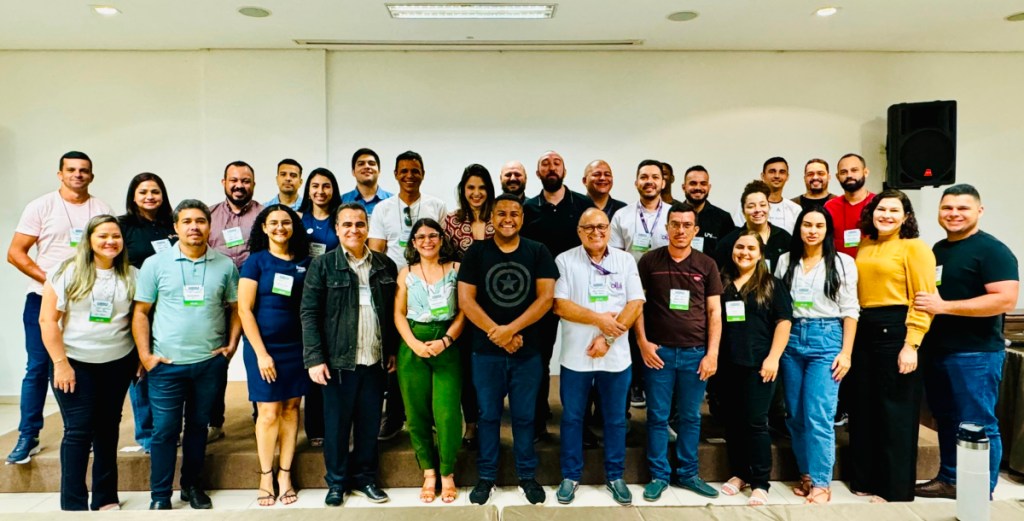
In June, we conducted two investment readiness workshops in the Amazon region: one in Santarém, Pará, and another in Porto Velho, Rondônia, both designed to support small ISPs operating in regions with a high demand for capacity-building and financial resources.
Santarém — sitting at the intersection of the Tapajós and Amazon rivers in the State of Pará — is a vibrant city known for its unique blend of urban and natural attractions. Our training in Santarém attracted 25 attendees from six ISPs, covering four states and serving a total of 76,750 users.

Meanwhile, Porto Velho, the capital of Rondônia, plays a pivotal role in regional trade and transportation. Our training there saw participation from six ISPs across Rondônia, Amazonas, and Acre, collectively serving 164,000 users.
Participants at both sessions were highly engaged, openly sharing their experiences and starting to workshop solutions to challenges during the meeting. The demand for this type of training was clear, with attendees expressing their interest in future opportunities to engage. It was encouraging to see that despite the challenges delivering connectivity in these regions there’s a thriving ecosystem of community-focused small ISPs eager to serve the most remote areas.
We heard repeatedly about the demand that providers are hearing from communities for fast, reliable internet. This demand comes in no small part from Brazil’s digitalization efforts such as the adoption of ‘PIX’, a government-backed digital payment system.
Ms. Conce, a restaurant owner in the Jamaraquá community of the Tapajós National Forest recently installed fiber optic internet to accommodate customers paying via PIX. She told us: “Until recently, I had to bring customers into my house so they could access WiFi and make payments via PIX for what they had consumed. Now I have fiber optic internet directly in my restaurant.” As more people and businesses rely on PIX for instant payments and other online services, the need for high-speed internet becomes ever more urgent, particularly in remote areas.
What’s Next?
Our long-term vision for Connect Humanity’s international work is to create replicable investment-readiness and funding models that can be adapted globally. This will include expanding our training initiatives and developing affordable financing mechanisms for communities to invest in connectivity. Brazil serves as our starting point, but the strategies and insights gained here will inform our approach in other countries.
We’ll continue to expand our efforts in the coming months, engaging with more communities and refining our approach as we work to build sustainable, community-centered connectivity solutions alongside local partners.
To follow our progress, connect with me and follow Connect Humanity on LinkedIn. If you’d like to discuss funding or partnering to support this work, reach me at nathalia@connecthumanity.fund.
Keep in touch
To learn more about our work follow us on social media, subscribe to our newsletter, and write to us anytime at info@connecthumanity.fund.