
Health, Housing, Small Business, Climate. Why Not Broadband?
Why digital infrastructure needs its own CDFI — and what we can learn from the sectors that got there first.
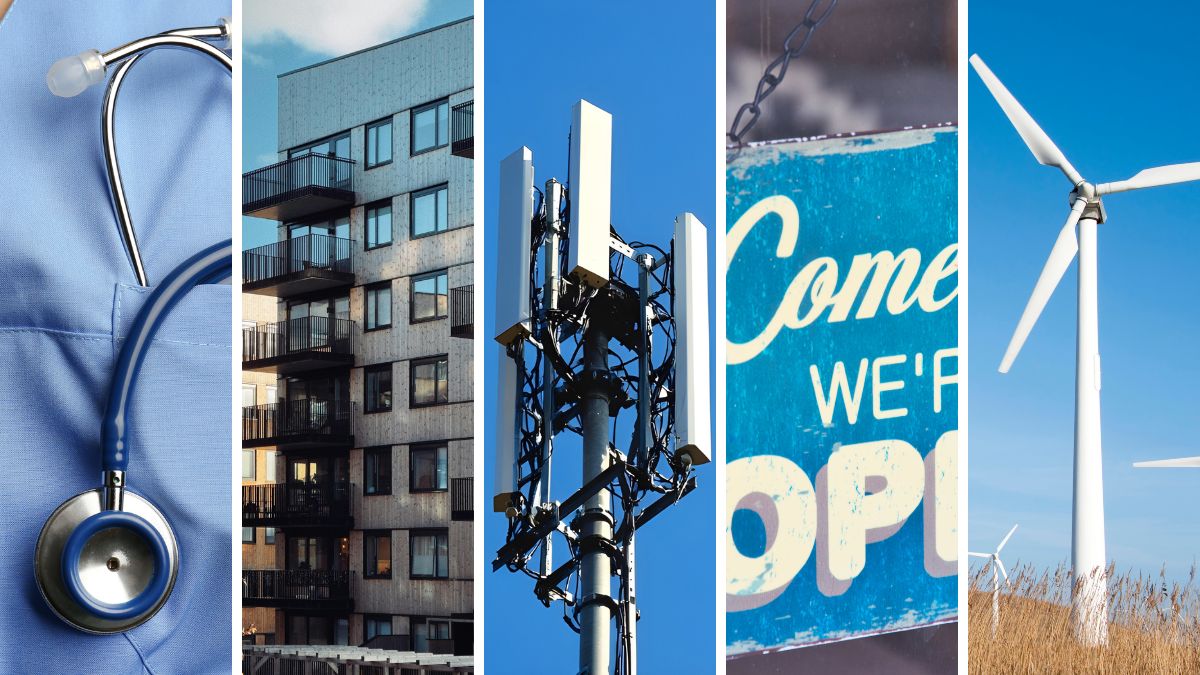
This month Connect Humanity announced we are on track to become a CDFI. What does that mean and why does it matter?
The digital divide is a financing challenge not a technical one. 30 million Americans are still out of reach of broadband because their communities — typically rural communities, tribal lands, and low-income neighborhoods — don’t fit the risk-return profile traditional investors look for.
This is holding back our economy and limiting people’s opportunities and agency. That makes the digital divide both a strategic and ethical failure for the United States.
The problem isn’t a lack of money. It’s a lack of the right kind of money. And for that, we can look to a model that has already solved exactly this problem, in sector after sector.
Community Development Financial Institutions (CDFIs) were created for structural disconnects like this.
What CDFIs Actually Do
CDFIs are mission-driven lenders certified by the U.S. Treasury. Their mandate is to get capital to people and places that conventional finance ignores.
By being mission-first rather than investor-driven, they are able to prioritise community needs before maximizing shareholder returns. That orientation allows them to accept higher risk, offer flexible terms, and pair financing with technical assistance and grants. Crucially, they leverage public funding to attract private investment, often returning several dollars in private capital for every federal dollar deployed.
The model has been stress-tested across multiple sectors:
Housing
The most mature example. According to Opportunity Finance Network (OFN), a national network of CDFIs, its members have backed affordable housing lending to support the development or rehabilitation of nearly 3 million affordable housing units nationwide, with CDFIs financing around $2 billion in mortgages annually. Behind those numbers are families with stable homes, children with consistent schools, and communities with the foundation to thrive. Where traditional banks may see risk and walk away, CDFIs have built the infrastructure of flexible underwriting, patient capital, and community accountability that makes affordable housing finance possible at scale.
Climate
CDFIs have become central to the energy transition, funding solutions for communities on the front lines of climate risk, extreme weather, and the energy affordability crisis. More than half of OFN’s member CDFIs now offer green lending products, a practice that was only starting to emerge in the sector a decade ago. These loans finance everything from solar installations and weatherization upgrades to energy-efficient affordable housing. These investments that lower energy bills, build resilience, and create local jobs in communities historically left out of the green economy.
The federal Greenhouse Gas Reduction Fund was designed to accelerate this further, channeling $27 billion through CDFI networks, with mandates to reach low-income and disadvantaged communities. While the programme has been shelved by the current administration, the lending infrastructure CDFIs built remains, galvanizing expertise, community relationships, and capital products to take on the climate challenge. Mission-driven capital has a way of outlasting the political cycles that fund it.
Small Business
When the federal government launched the Paycheck Protection Program during Covid-19 — emergency loans designed to keep small businesses afloat — big banks prioritized existing clients and larger loan sizes. CDFIs did the opposite, routing more than $34 billion to the businesses conventional lenders passed over. CDFIs reached financially underserved businesses with a higher proportion of their loans compared to every other type of PPP lender. The SBA reported that 40% of CDFI loans were in low- and moderate-income areas. The State Small Business Credit Initiative has since channeled $3.4 billion through CDFI-supported lending programs, allowing CDFIs to keep supporting the corner stores, family restaurants, neighborhood childcare providers, and other businesses that hold communities together and provide vital jobs.
Rural Healthcare
Rural hospitals and clinics face the same economics as rural broadband. Low density and fixed infrastructure costs means profit margins that don’t match the investment strategies of most mainstream lenders. Without intervention, communities lose their clinic, and residents face hours of travel for care. CDFIs have stepped in to finance federally qualified health centers and rural medical facilities in places that wouldn’t otherwise have them, keeping care local, communities healthy, and people out of crisis.
The sector has produced dedicated specialist CDFIs, like the Community Health Center Capital Fund, which exists to finance health centers in underserved communities through direct lending and New Markets Tax Credits. If healthcare has a dedicated CDFI, it can be done for digital infrastructure.
It’s time for a CDFI for digital infrastructure
Digital infrastructure faces the same structural problem as all of the above: the communities that need it most are the least profitable to serve. Private equity has poured $800 billion into digital infrastructure over the past decade — but rural and low-income markets are structurally incompatible with the return expectations driving that capital. One hundred billion dollars in federal broadband spending between 2010 and 2020 closed the digital divide by less than 1 percent.
The pattern should be familiar by now. When profit-driven capital won’t go, and grants alone aren’t enough, you need a purpose-built financing institution that can sit in the middle — taking on risk, attracting private capital, and staying accountable to communities.
That’s what CDFIs do. And until now, no CDFI has been dedicated specifically to digital access and inclusion.
Filling the Gap
Connect Humanity is pursuing CDFI certification to become the first fund dedicated to financing digital inclusion for rural and underserved communities. The goal isn’t to replace grants or displace responsible private investment but to build the financing layer that makes both more effective.
Certification will open access to the CDFI Fund’s grant and award programs, position us for capital from banks seeking to meet their Community Reinvestment Act (CRA) obligations, and signal to impact investors, foundations, and public agencies that the organization meets a rigorous federal standard for mission-driven lending. That translates into lower-cost capital, larger and more diverse funding stacks, and the ability to offer the kind of flexible, patient financing that community-centric broadband providers currently struggle to access.
It will mean Connect Humanity can do more, reach further, bring more partners to the table, and encourage other CDFIs to take up digital infrastructure lending.
We are on our way, but realizing the potential of a CDFI for digital infrastructure requires partners who see what’s possible. If you’re a funder excited to go beyond funding digital inclusion projects by capitalizing an institution that funds them long-term, this is that opportunity.
The communities still waiting for connectivity can’t afford to wait for the market to come to them.
Connect Humanity is pursuing CDFI certification to become the first impact fund dedicated to digital infrastructure financing for rural and underserved communities. Learn more →
Keep in touch
To learn more about our work follow us on social media, subscribe to our newsletter, and write to us anytime at info@connecthumanity.fund.