
Bridging capital and community broadband: notes from Nairobi
Connect Humanity joins APC, Rhizomatica, and AFRALTI to deliver bootcamp for community-centered connectivity initiatives
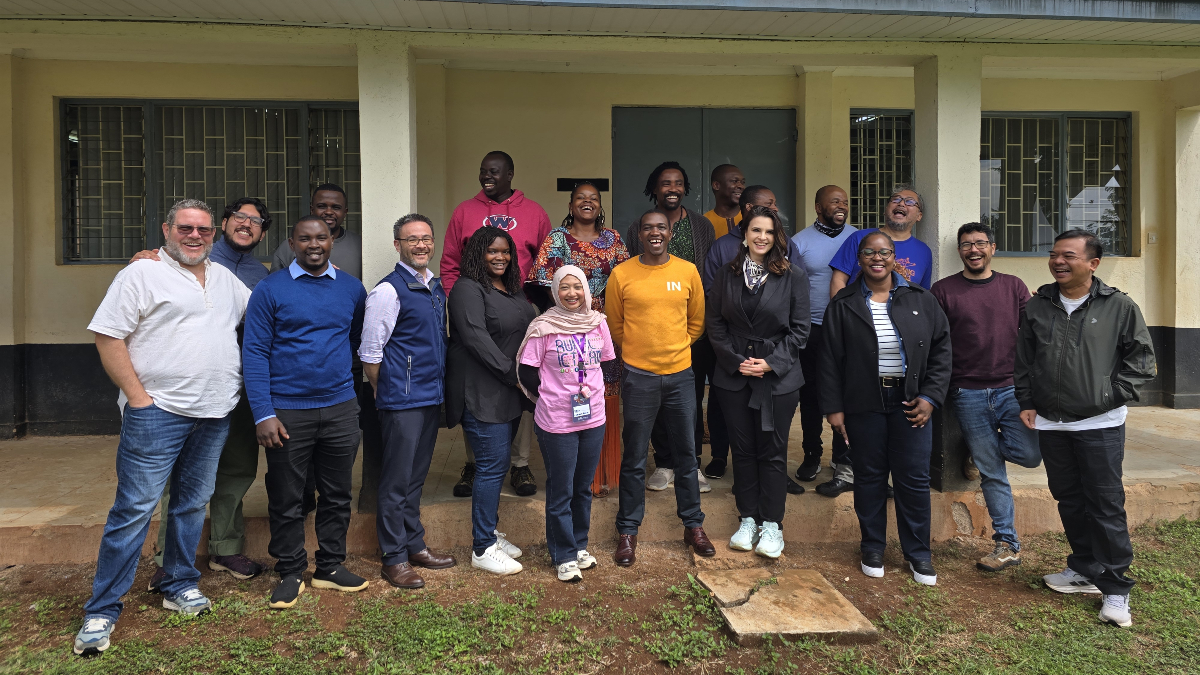
In a classroom on the outskirts of Nairobi, community broadband leaders pored over income statements, debating how to describe their connectivity projects in terms infrastructure investors will understand.
All of them have built broadband networks. They know what their communities need, and they have the technical expertise to deliver it. Now they’re working on building sustainable financing models that move beyond grant funding.
That challenge brought together 11 community-centered connectivity initiatives from across Africa, Latin America, and Southeast Asia for a workshop on broadband finance led by Brian Vo, Connect Humanity’s Chief Investment Officer.
For participant John Gitonga, Finance Lead at TandaNet — a community network serving neighbourhoods in nearby Kibera — the challenge is familiar.
“90% of our funding has come from grants” he said during the session. “But now we are trying to diversify our sources of revenue.”
Investment readiness matters
The workshop was part of a bootcamp for community broadband leaders, convened by the Association for Progressive Communications (APC), Rhizomatica, International Telecommunications Union (ITU), the African Advanced Level Telecommunications Institute (AFRALTI).
Brian Vo and Nathalia Foditsch, Connect Humanity’s International Programs Director, were invited to share lessons from our work helping community connectivity providers to access more capital.

Our discussions addressed a challenge faced by community networks everywhere: finding financing that can sustain and grow their networks without compromising the needs of the communities they serve.
In a chapter published last year, Connect Humanity argued that community-centered networks are investable if the right financial tools and investment frameworks exist to support them.
But even when capital is available, many network providers still face practical barriers in shaping up business models and financial plans that can get investors on board.
Our investment readiness sessions in Nairobi were designed to help close that gap, giving network leaders a clearer view into how infrastructure investors evaluate broadband projects and how community networks can position themselves to access capital.

Sustainable capital for community networks
Nathalia led a workshop, joined by 60 participants, on the long-term sustainability of community-centered connectivity initiatives, exploring how community networks can build operational models that allow them to grow beyond short-term funding cycles.
Brian’s Mini-MBA picked up from there, diving into the financial mechanics that shape how investors evaluate broadband infrastructure, from revenue modeling to capital structures and risk.
Together, the sessions aimed to give network providers a clearer view into how capital markets work and how community networks can position themselves to access them.
For TandaNet’s John Gitonga, the training helped answer questions he had been wrestling with for years:
“I’ve always wanted to understand how investors think,” said Gitonga. “How they look at our financial statements, how they translate our impact into financial terms, and what they need to see in order to support networks like ours.”
Connectivity where it matters most
As part of the bootcamp, TandaNet invited participants to visit Kibera, where the network began.
Just a few kilometers from Nairobi’s city center, Kibera is one of the largest informal settlements in Africa — a dense community where hundreds of thousands of people live in tightly packed neighborhoods, most earning less than KES 270 ($2) a day, and with limited access to basic services and infrastructure.
Reliable internet access has historically been scarce, despite the growing importance of connectivity for education, business, and civic life.
Founded by the community organization Tanda, the network was built to close this gap, bringing affordable connectivity and digital tools directly into Kibera. Today, TandaNet connects more than 100 local hubs, including schools, small businesses, health centers, and community organizations, helping residents access online services, develop digital skills, and participate more fully in the digital world.
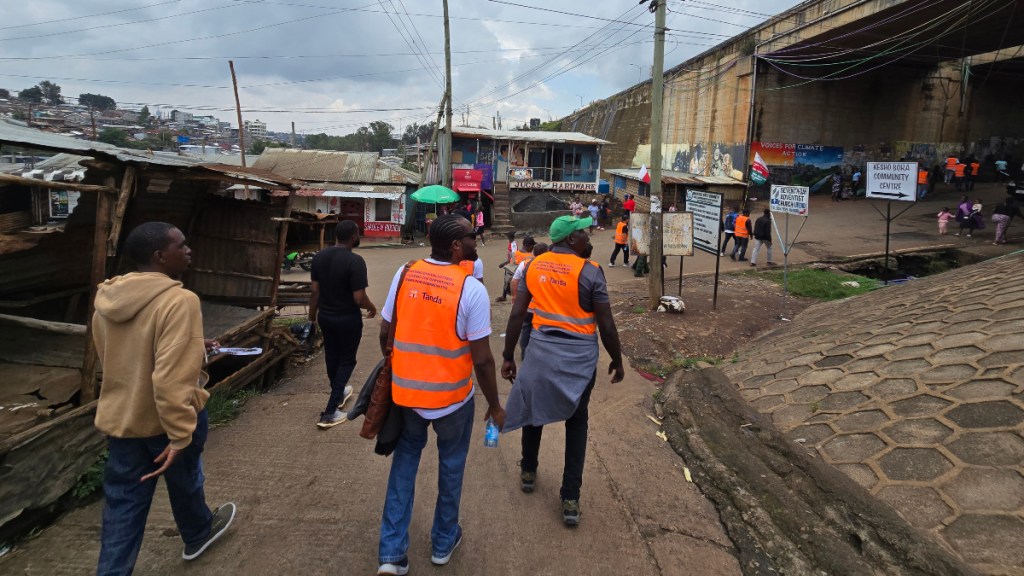
Walking through the community with David Ochiel, Director of TandaNet, we could see the value the network has created flow through neighborhood shops, classrooms, and community spaces run by the people who live there. We were also introduced to an active network of resellers who act as ‘last mile’ providers for Kibera residents.
The visit was a powerful reminder of why this work matters. Behind the investment memos and financial statements we debated in the Nairobi classroom are communities where connectivity is unlocking opportunity and changing lives.
From training to capital
Community networks across the world are connecting places that telecom markets have too often left behind — rural regions, informal settlements, and towns where traditional commercial models often struggle to reach. But the financial tools available to support these networks have not kept pace with their progress.
That gap is where Connect Humanity is focused.
We are working to shape a financial ecosystem that allows community-centered networks to access the capital they need to sustain and grow. The sessions in Nairobi were one example of that approach: sharing practical financial tools and helping operators understand how investors evaluate broadband infrastructure.
We are continuing to explore ways to expand this kind of financial technical assistance for ISPs, working with partners and funders who see the opportunity in strengthening the investment readiness of community networks around the world.
The networks already exist. The demand is huge. And in truth, there’s no shortage of capital either.
What’s missing is fit-for-purpose capital that can serve these networks. Our task is building the structures that allow it to reach communities in places like Kibera.
Keep in touch
To learn more about our work follow us on social media, subscribe to our newsletter, and write to us anytime at info@connecthumanity.fund.