
How the Rio Grande Valley prepared to negotiate with AI data centers
What the RGV will ask of AI data centers, and a template your community can use as a model
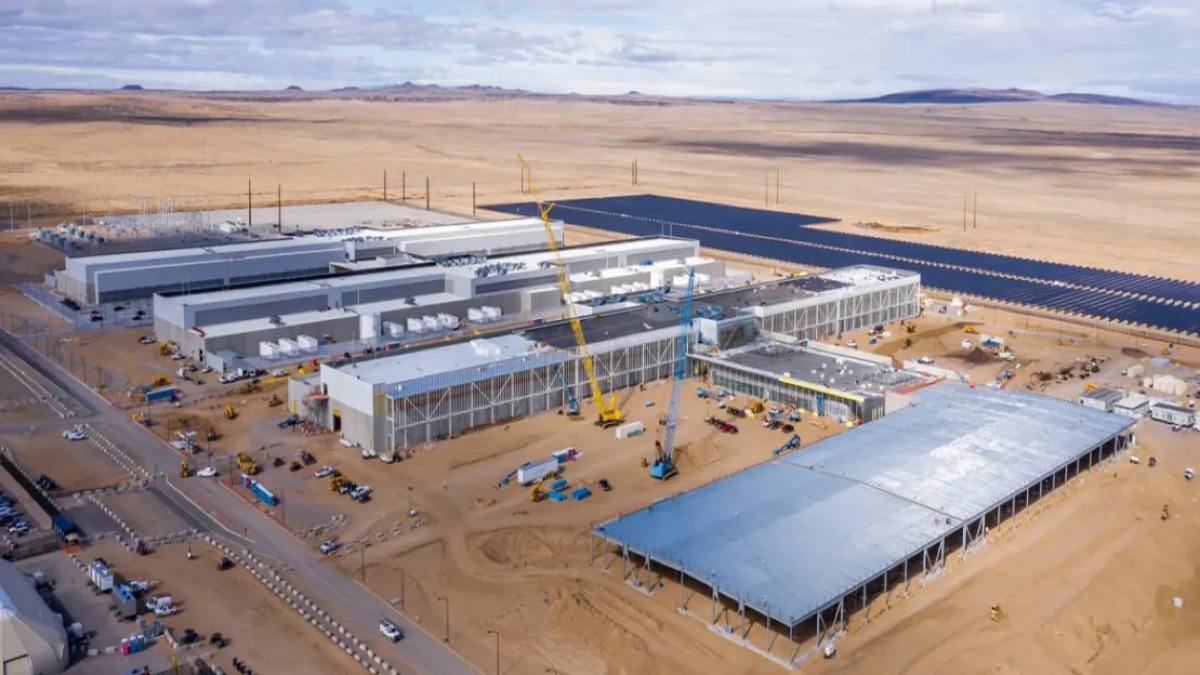
Data center in Los Lunas, New Mexico | Photo: Meta
When an AI data center developer comes to a city or county in the Rio Grande Valley (RGV), local leaders are now prepared for the conversation. The RGV AI Data Center Community Benefit Agreement Term Sheet sets out what the region expects in return: protections for water, air, and wildlife; local jobs and support for workforce programs; affordable broadband and adoption; and public accountability.
In 2026, the RGV Broadband Coalition brought residents, community organizations, and local governments together to explore how communities can negotiate with data center developers. The result is a term sheet which the Lower Rio Grande Valley Development Council board (our local Council of Governments) adopted on October 28, 2026, for cities and counties in the region to use for negotiations with developers.
What is a community benefit agreement?
A community benefit agreement (CBA), sometimes called a public benefit agreement, is a legally binding contract between a local government and a company. The company commits to specific investments and protections in exchange for locating in that community. A term sheet comes before that contract, listing the commitments a city or county will ask for, so negotiators start with a clear position.
Why does the Rio Grande Valley need one now?
AI companies and developers are scouting Texas, the Rio Grande Valley, and the wider border region for locating hyperscale data centers. A single campus can cover the equivalent of 70 football fields or more, and draw heavily on local water and power. The Valley has good reason to be careful with both. Water is already scarce here, and drainage is a long-standing concern for many communities.
The RGV is also a persistent poverty region, and there is a significant power imbalance between the AI companies/developers and local governments, including deep rural counties with few staff. Thus, it’s important to ensure communities understand their leverage, have the resources to negotiate, and develop a CBA term sheet that reflects their priorities.
Timing is important as a community’s negotiating power is highest before a developer secures tax abatements, permits, and other conditions. If local leaders have already passed an ordinance or resolution that requires an executed community benefit agreement before the company can be offered tax abatements or permits, expectations can be set early, rather than reacting to a developer’s terms.
How did residents shape the term sheet?
The RGV Broadband Coalition ran three community workshops for residents, community organizations, and local governments across Cameron, Hidalgo, Starr, and Willacy counties. Participants heard what other communities have experienced with hyperscale data centers, trained in negotiating community benefit agreements, and set out the commitments they wanted.
Their priorities translated into five broad areas: environment and resources, workforce and jobs, closing the digital divide, healthcare and telehealth, and governance and accountability. They also set principles for any agreement:
- No NDAs: all terms are public.
- English and Spanish throughout.
- An advisory board with resident-majority representation.
- Binding commitments, not aspirations.
- Commitments that are specific, long-term, and regional in scope
What does the term sheet ask of data center developers?
The term sheet sets out commitments in the following areas.
Water
Disclose expected water use and sources before construction, and actual use every year after. Help fund new supply such as water reuse and desalination projects. Use closed-loop or dry cooling, and follow drought restrictions. Support for drainage projects.
Energy and air
Fit emissions-capture technology on onsite generators, and hold public meetings before filing air permits. Remove temporary gas generation once the grid can supply power. Set a renewable energy target.
Noise
Commission independent noise studies from nearby residences before and after construction, and implement noise reduction technologies for generators and servers.
Wildlife
Complete a wildlife impact study at least six months before construction, with mitigation and dark-sky lighting to protect migratory birds.
Jobs and local business
Meet local hiring targets for construction and permanent roles, buy locally, support regional workforce programs, host paid internships and apprenticeships with regional training programs.
Community fund
Pay an upfront contribution and a share of annual revenue into a locally governed fund for workforce, digital inclusion, and telehealth programs.
Broadband
Lay extra fiber conduit along the data center’s route for regional internet providers to lease at affordable rates, and support affordable internet for low-income households.
Telehealth
Fund telehealth access, digital navigators, and community health workers at community clinics.
Accountability
Track every commitment on a public dashboard, answer to a resident accountability board, conduct regular emissions tests and support community “citizen scientist” emissions monitoring.
How can local officials use the term sheet?
Since the RGV is made up of four counties, the term sheet is built to be customized. Officials can keep the core regional commitments and add their own local priorities and programs. Communities elsewhere can use it as a model as they prepare for their own negotiations.
Local governments hold real leverage. Tax incentives, permits, and zoning approvals should all be made conditional on a signed CBA. Municipally owned utilities, public support, and a trained regional workforce are also points of leverage. Alongside the term sheet, our resource pack includes a one-page guide to using this leverage and the workshop slides for running community meetings. Get the resources. For the questions to ask developers before talks begin, see our guide to negotiating with data center developers.
All of these materials are published under a Creative Commons license, so any city, county, or community group can use them. Some provisions are specific to Texas, such as references to the Texas Commission on Environmental Quality and state rules on onsite power generation, so communities in other states will need to swap in their own regulators and laws.
Where can I get the term sheet?
For access to the term sheet, workshop slides, and additional resources, please share your details using the form below.
To talk about using the workshop materials and term sheet in your community, contact the RGV Broadband Coalition: Jordana Barton-Garcia, Director at jordana@connecthumanity.fund.
Keep in touch
To learn more about our work follow us on social media, subscribe to our newsletter, and write to us anytime at info@connecthumanity.fund.