
Jeanine Abrams McLean: scientist-turned-community organizer on why broadband strengthens democracy
An interview with Connect Humanity’s newest board member
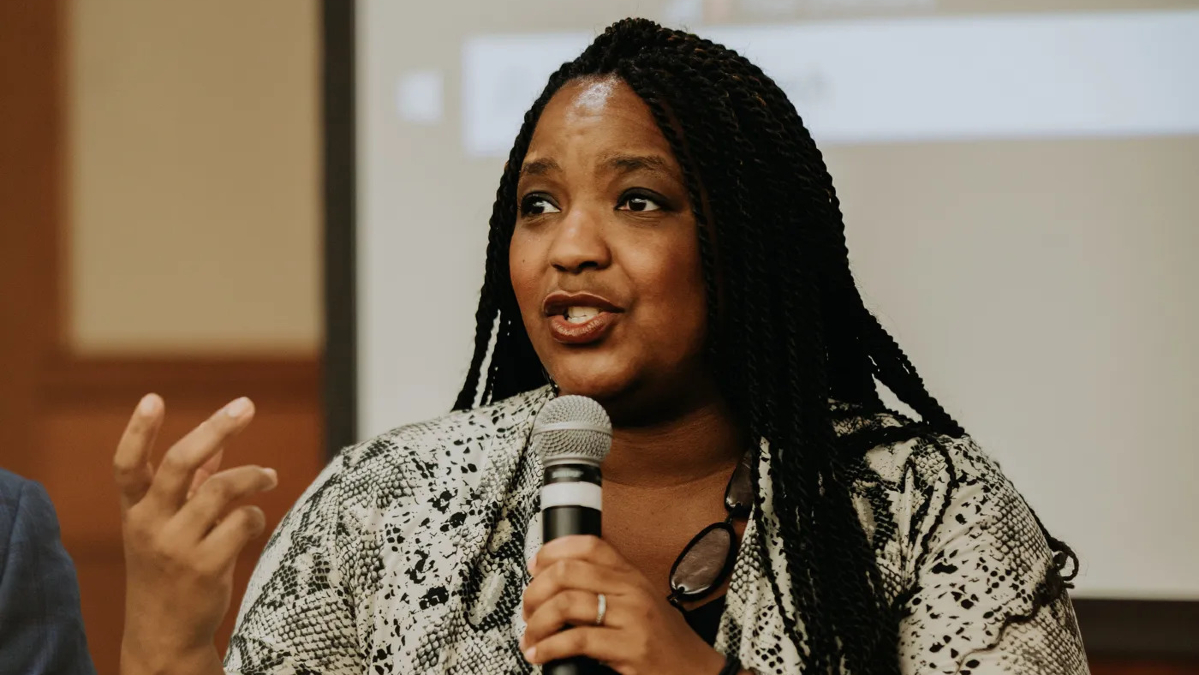
Jeanine Abrams McLean, a longtime friend of Connect Humanity, is the newest member of our governance board. To tell us about her work and why she’s an advocate for digital equity, she sat down for a chat with our co-founder and fellow board member, Chris Worman. Here’s a readout of their conversation.
Welcome to the Connect Humanity board Jeanine! As well as steering this organization, you lead the organization Fair Count. Tell us about that work.
Fair Count is a non-partisan non-profit that focuses on deep community organizing to encourage civic engagement in marginalized and under-counted communities — specifically around the census, voting, and redistricting. We call that our three pillars of democracy. We use organizing to help communities build power and to teach them how to wield that power.
We use organizing to help communities build power and to teach them how to wield that power.
How does technology play into that?
We do a lot with technology. Early on we built an app to help with faith-based organizing and did a project using digital organizing tools for voting and Census outreach. Last year we did a pilot using AI to do voter sentiment analysis while we were door knocking. Right now we’re creating a video game to help school students learn about civic engagement in a fun way. Broadband access is integral to all this, which is why I’m so excited about what y’all do at Connect Humanity.
Was there a moment that you first realized the importance of the intersection between civic engagement and internet access?
In 2019 we did an analysis looking at communities that were historically undercounted in the census ahead of the 2020 count which was going to be the first done primarily online. We found that at least 20% of Georgia households lacked broadband. The moment that it really brought this home was when one of our organizers went to a town in Southwest Georgia where the only place with internet access was the public library. Students would go after school to do their homework. But after someone complained about loitering in the evenings, the library started turning off the Wi-Fi. This is a very rural community where you can’t go sit at a Starbucks. The library was the only option. Once we heard that, we were like, ‘we can wait for folks to find it in the goodness of their hearts to provide internet, or we can work with communities to figure out how to get internet to them.’
And you started an internet installation program?
Yes, we did a pilot with the AME Church here in Georgia, providing 25 churches with free WiFi hotspots and devices. Once we worked out the kinks, we started getting them in all kinds of places. Barbershops, community centers, migrant farm worker clinics, libraries. Wherever people felt safe and comfortable. It’s not a long-term fix — but that’s how we got started.
We can wait for folks to find it in the goodness of their hearts to provide internet, or we can work with communities to figure out how to get internet to them.
It was around that time in 2020 we started talking about Connect Humanity — you were part of the panel discussion where we talked about the need for investment in digital equity. Do you remember what you were thinking?
I was glad there were people actually talking about connecting the billions of people who still don’t have connectivity. I thought, ‘this is bold’, but I believed it could work. I know that Connect Humanity right now is primarily focused on the US, but in my mind it’s always been about how we’re going to do this across the world. I just thought it was really audacious.
How do you view the progress or lack thereof that’s been made on this issue since then?
I think the fact that there’s more funding for broadband in the US is fantastic. It’s not enough, but it’s a huge step in the right direction. That said, it’s a big blow that the Affordable Connectivity Program has ended and all those families don’t have that help anymore. On BEAD [Broadband Equity Access and Deployment program], the jury is out. We’ve been doing an analysis of BEAD plans in 12 states in the South and the Southeast, grading them on how equitable they are — they’re not doing great. I’m hoping we see some improvements from here.
The fact that there’s more funding for broadband is fantastic. It’s not enough, but it’s a huge step in the right direction.
I’m also excited there are organizations doing this regardless of what happens with federal funding. I appreciate the fact that y’all were like, “these funds are coming, let’s empower folks on the ground to figure out how they can harness this for their communities”. It’s great that you focus on leveraging, but not depending on, public funds to close the digital divide.
In recent years there’s been a huge shift in how people see the internet as a force in the world. Last decade, with moments like the Arab Spring, people saw hope that the internet would be a force for civic power and democracy. Today, it’s more of a mixed bag. How do you think about this?
Giving people internet is not going to fix everything. But people do need internet access. Fair Count’s north star is the census. We saw all the issues in 2020 with people not being counted. Now, with more updates in the census, it’s imperative we achieve digital equity by 2030 to make sure communities don’t continue to be left out. On the other hand, we have this explosion of misinformation online — and it’s getting worse. That is detrimental to our democracy. Pro-democracy organizations can’t just stick our head in the sand or pretend that someone else is going to handle it. You can advocate for equitable access while using grassroots efforts to work for policies and programs that combat the threat of disinformation and other problems.
Absolutely. And it’ll take many minds working together. We’re so excited that you’re contributing to these efforts. What are you planning to bring to the Connect Humanity board?
I’m a connector and I spend a lot of time thinking about how other fields and organizations can make digital equity part of what they’re doing. So I’ll be making those links. Also, a huge part of this mission is grounded in community engagement and I can reach folks that might not be working in the digital space, but really should be. I love the work and I’m happy to jump in wherever I’m needed.
I thought, ‘this is bold’, but I believed it could work.
We’ll take you up on that! You built a career as an evolutionary biologist. Why the step into community organizing?
It happened in late 2018 when my sister Stacey [Abrams] and I were sitting on her couch after the 2018 election. She had been thinking about what to do to make change after losing out on the Georgia governorship. Stacy came up with three organizations on that couch. She asked me, if I had to count everybody in the state of Georgia for the census, how would I do it? I said, I don’t know. But I’m a researcher, so I went home and I looked at the census and uncounted populations. I came back a couple of days later and said if you want to get everybody counted, you should do this, this, and this. She responded, “I need you to do all those things that you just said”. If she had asked me just point blank to help start the organization, I would have said no, because it’s hard to step out of your life’s work. But Stacy is smart and knew that if she got me to think up solutions, I’d be hooked. But I still get to keep one foot in science and technology!
And finally, when you’re not building local power, how do you take down time?
I have a lovely back porch. And so I like to go out, play music, turn on the fan, and then I sleep. And I read books. And I love karaoke and that also happens on our back porch very often. Usually with wine.
Go-to karaoke song?
I have two. One is Miranda Lambert’s Gunpowder & Lead. The other is Part of Your World, from the original Little Mermaid, which is my all time favorite movie.
You have range! Thanks for your time. Thanks for joining the board. And I hope you get some karaoke and porch sleeping time this weekend.
So glad to do it. Thanks Chris!
Keep in touch
To learn more about our work follow us on social media, subscribe to our newsletter, and write to us anytime at info@connecthumanity.fund.