
What is community broadband?
Essential research and resources to understand community broadband
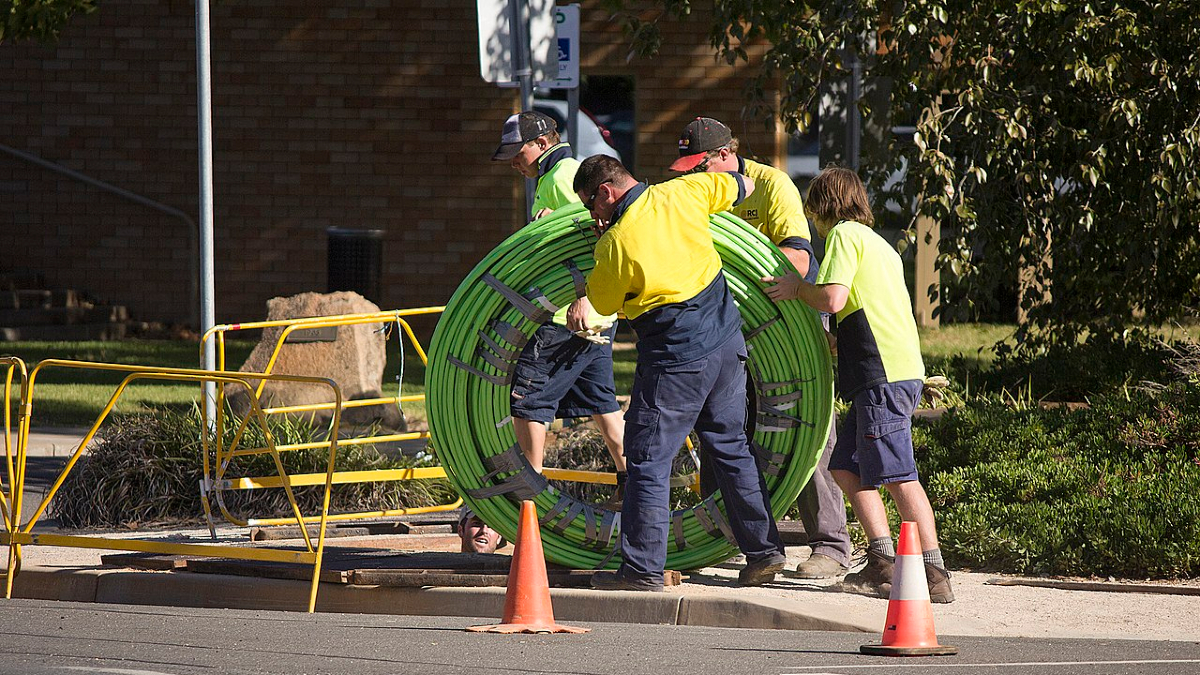
Photo: Bidgee (CC-SA-3.0)
A question we hear often is: “what is community broadband?” The answer depends on who you ask, but when Connect Humanity uses the term, we mean networks built to serve the public good first, not to maximize private profit.
Community broadband can take many forms, including:
- Municipal or tribal networks – Publicly owned, locally managed broadband
- Community-owned – Infrastructure owned and controlled by the community
- Co-operatives – Member-owned broadband, often through rural electric co-ops
- Locally owned private ISPs – Small, private providers rooted in the community
- Public private partnerships that blend local ownership and operating structures with private sector models.
These models aren’t new. At last count, the Local Institute for Local Self-Reliance (ILSR) documented over 400 municipal networks serving 700+ communities — and many more fit our broader definition. Connect Humanity provides financing, planning, and technical support for community broadband efforts because we believe this approach is best suited to connecting the rural and low-income communities left behind by the market.
To help you explore this space, we’ve gathered research and articles from leading organizations documenting how community broadband can bridge the digital divide and tackle socioeconomic disparities.
What is community broadband?
- What is a community provider?: Connect Humanity’s visual overview explores community broadband ownership and operating structures
- Why community broadband matters: In Fast Company, Cheri Beranek explains how community broadband can step in where markets fail.
Why do we need it?
- A Key Tool for Closing the Digital Divide: National League of Cities on how community broadband addresses America’s connectivity gaps.
- Community-Owned Fiber Networks are Value Leaders: Harvard’s Berkman Klein Center report finds community-owned networks deliver lower, more transparent prices.
What does the landscape look like?
- Community network map: ILSR’s interactive map shows the spread of municipal networks across the US.
- Diverse Approaches to Connectivity Challenges: ILSR and Benton case studies of six networks outperforming incumbents’ one-size-fits-all approach.
- The Fast, Affordable Internet Option That’s Flying Under the Radar: New America case studies highlight how community broadband advances affordability, quality, and universal access.
What are the barriers?
- Municipal Broadband Blocked In 16 States: BroadbandNow details where state laws still ban local broadband efforts.
- Communities versus Incumbents: ILSR details how residents in East Carroll Parish had to rally to fend off anticompetitive pushback from a major ISP.
- Financing Broadband in Hard-to-Reach Communities: In Stanford Social Innovation Review, I argue for a capital market designed to unlock growth for community broadband.
How to get started
- How to Build a Public Broadband Network: The American Association of Public Broadband’s handbook guides leaders through the key decision points and steps to launch a community network (I’m a proud AAPB Board Director).
- Financing mechanisms for locally-owned internet infrastructure: Connect Humanity and partners detail operating and financing models to help leaders identify sustainable financing to scale community broadband.
- Community Networks: ILSR’s hub for stories, data, and analysis on community broadband and the shortcomings of the status quo.
–
To learn how Connect Humanity can support your efforts with technical assistance, broadband planning, and financing, get in touch.
Have a favorite resource we should add? Send it to info@connecthumanity.fund.
Keep in touch
To learn more about our work follow us on social media, subscribe to our newsletter, and write to us anytime at info@connecthumanity.fund.