
How local leaders are wiring Appalachia for the future
The Appalachia Digital Accelerator story so far

When Connect Humanity launched the Appalachia Digital Accelerator, we set out to change how broadband planning is done. Rather than be led by outside consultants, the program was designed to put communities in the driver’s seat: equipping local leaders with the tools and support they need to lead and sustain this work.
Thanks to the Appalachian Regional Commission (ARC), and additional funding from the Truist, Ford, and Duke Energy Foundations, the Accelerator has now worked with teams across 11 Appalachian states to develop 48 broadband connectivity plans covering 71 communities. These plans map out communities’ specific broadband infrastructure and inclusion challenges and offer practical solutions and strategies for implementation.
Championing local leadership
A new generation of local champions have stepped up to advance connectivity in some of the nation’s hardest-to-reach places.
In Northeastern Kentucky, Kristie Dodge and Sierra O’Cull from the Buffalo Trace Area Development District (BTADD) were two of those who rose to the challenge. Before joining the Accelerator, broadband was one in a long list of community priorities.
“When the pandemic hit, there was a real urgency for communities to prioritize digital infrastructure,” said Kristie. “In the midst of this change, we lacked the ability to really hit the pause button so we could focus on broadband planning. Support from Connect Humanity and SOAR enabled us to dedicate staff time and resources to really dig deep with community partners on planning efforts.”
Kristie and Sierra led the creation of comprehensive broadband plans for Lewis and Robertson Counties and are helping the region move broadband aspirations to action. What began as a side issue is now central to the work of BTADD.
Building capacity across Appalachia
The Accelerator has helped dozens of grassroots organizations and local governments deepen their broadband know-how and develop partnerships to advance connectivity plans. Leading experts from organizations including ILSR, NDIA, RISI, Breaking Point Solutions, and Reid Consulting helped communities get into the weeds with custom mapping tools, digital adoption strategies, financing models, and partnership negotiations. Participants had access to group sessions and one-to-one guidance with grant-writing, network design, broadband economics, and more.
Here’s what that looks like in numbers:
leaders trained in broadband development
hours of technical assistance delivered
local coalitions created/strengthened
community sessions held
This support has been game-changing for some communities. In Fleming-Neon, a Kenucky town devastated by floods in 2022, Cheryl Hawkins joined the Accelerator to address the dire state of local connectivity amid a historic lack of investment. Her efforts moved the incumbent ISP to make long-overdue upgrades. Residents who once struggled to get through a Zoom meeting now enjoy speeds approaching 1 Gbps.
“The Appalachia Digital Accelerator has been a revelation,” Cheryl says. “The meetings, trainings, and community discussions deepened our understanding and helped our citizens realize we shouldn’t settle for substandard internet access.”
Now, Cheryl and her husband Jeff Hawkins are working to transform a historic downtown building into “Neon Lights”: a community digital hub where residents can access devices, receive digital skills training, and get eldercare and telehealth assistance.
Action to match ambition
Across the program, grantees are moving forward:
connectivity plans completed
follow-on investment catalyzed
funding applications pending
plans being operationalized
new initiatives being launched/ informed
The Accelerator brought national expertise to the local level, and delivered results. Behind every number is a story of community-led progress:
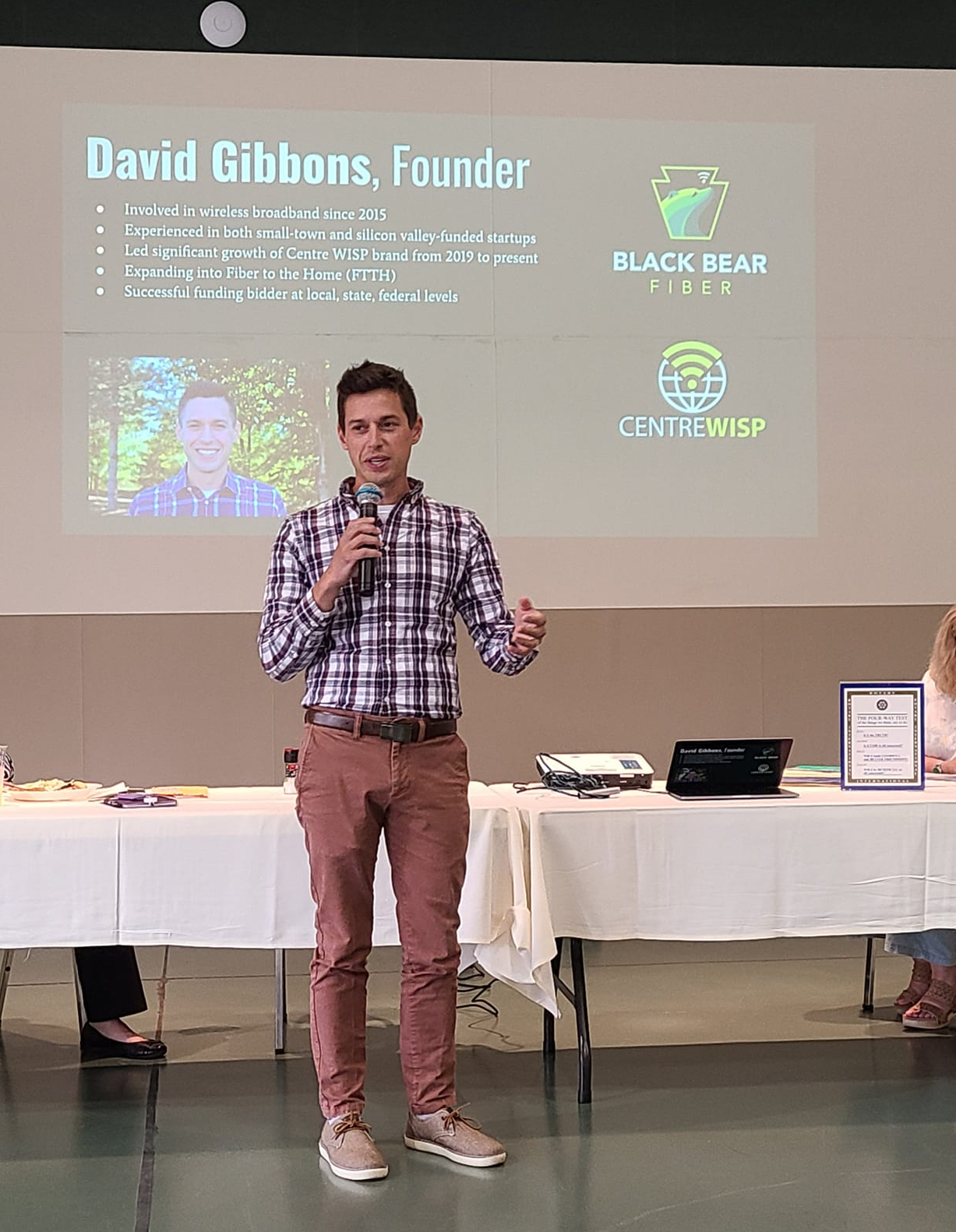
Black Bear Fiber, Pennsylvania
In rural PA, family-run ISP, Black Bear Fiber, put together $25 million in bids for federal grants and loans with support from the Accelerator. With a tentative BEAD award of almost $15 million already secured, this injection of funds will enable Black Bear to reach thousands more homes and businesses — expanding high-speed internet across seven rural counties.

Red Bird Mission, Kentucky
The team at this century-old Christian mission is on course to deliver high-speed broadband that has, until now, proved impossible. Alongside a coalition including Just Transition Fund, Rural LISC, Thacker Grigsby, ARC, the state broadband office, and others, the Accelerator has developed a proposal for a redundant fiber loop to connect the Red Bird campus and surrounding community. With an ARC POWER bid now under review, Red Bird is closer than ever to ensuring students, workers, and families have dependable internet access. The project is a prime example of how local leadership, regional collaboration, and hands-on support can deliver where markets haven’t. Red Bird has also secured funding for a community tech hub that will provide telework spaces, learning labs, and training for local entrepreneurs.
Graham County, North Carolina
In Graham County, G.R.E.A.T. worked through the Accelerator to develop a phased fiber plan and lead a successful challenge to federal broadband maps — reclassifying hundreds of locations as unserved. That effort opened the door to BEAD eligibility and set the stage for countywide fiber deployment. Along with RDOF-funded construction in the county’s business district of Robinsville, local leaders now see a clear path to achieving universal fiber coverage in one of the state’s most remote regions.
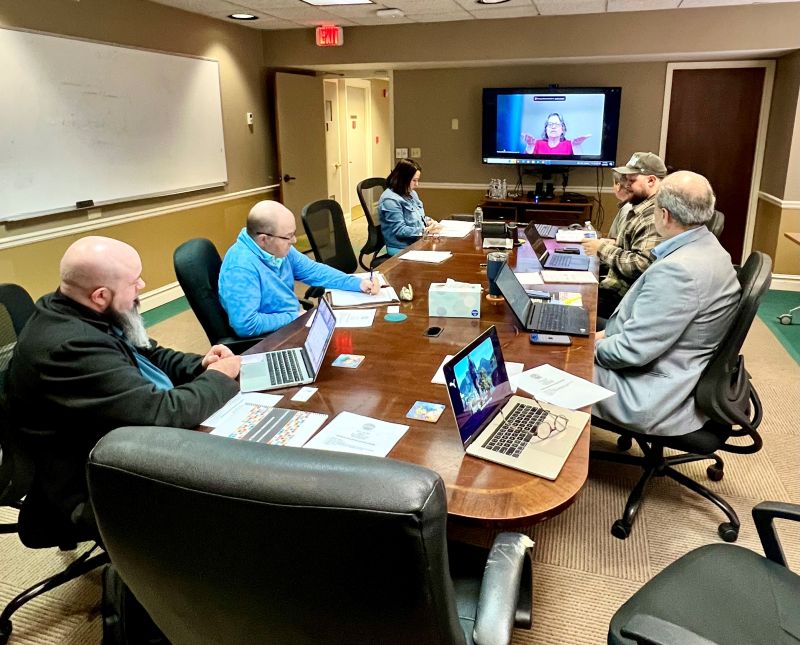
Whitfield County, Georgia
Local leaders have reinstated the Whitfield county’s Broadband Ready Community status — opening doors to new funding opportunities. To keep residents at the heart of decision-making, they formed a Citizen Broadband Advisory Group to ensure those most affected by poor connectivity are shaping the county’s broadband future. County Commissioners have consistently demonstrated creative problem-solving, including a forward-thinking initiative to integrate broadband into a sewer infrastructure project. This project, pre-dating the Accelerator, has made the neighborhoods and schools along the sewer route fiber-ready.
No “one-size-fits-all”
Each Appalachia Digital Accelerator came with different challenges and called for unique solutions. Local leaders need tailored support to pursue what works best for them.
As Generation West Virginia’s Annie Stroud put it:
“People on the ground are the ones who most keenly feel and understand the barriers, and often have the best ideas on how to address them. This project gives county partners the tools they need to expand digital inclusion efforts.”
None of this has been easy. From hurricanes that hit hard in North Carolina, Kentucky, Tennessee, and Virginia, to shifting priorities in D.C., Accelerator Communities have faced no shortage of challenges.
Digital Equity Act funding that many were counting on to fund adoption programs was cancelled. The midcourse reshaping of the BEAD program caused delays and cut funding for fiber that would have served generations of Appalachians with lightning fast internet. And BEAD non-deployment funds that were due to bridge infrastructure and adoption remain stalled.
This uncertainty must not stop progress. Local leaders have put in the effort, built the partnerships, and made smart, strategic plans. What they need now is continued support to bring those plans to life.
Now is the time to double down
Everyone should have access to the tools to live in the places they call home, to succeed in school and secure their next job, to build local opportunities. We’ve seen what’s possible when local leaders have the support they need. We continue to work with Accelerator partners to raise funds to move their plans forward. And we are exploring new revenue models to sustainably fund infrastructure and digital adoption programs.
Building a connected, resilient Appalachia doesn’t happen in a one- or two-year grant cycle — it takes time. Let’s make sure these communities have what they need to go the distance.
If you’re a funder who can support connectivity in Appalachia, let’s get creative. Email me at samantha@connecthumanity.fund.
Keep in touch
To learn more about our work follow us on social media, subscribe to our newsletter, and write to us anytime at info@connecthumanity.fund.